
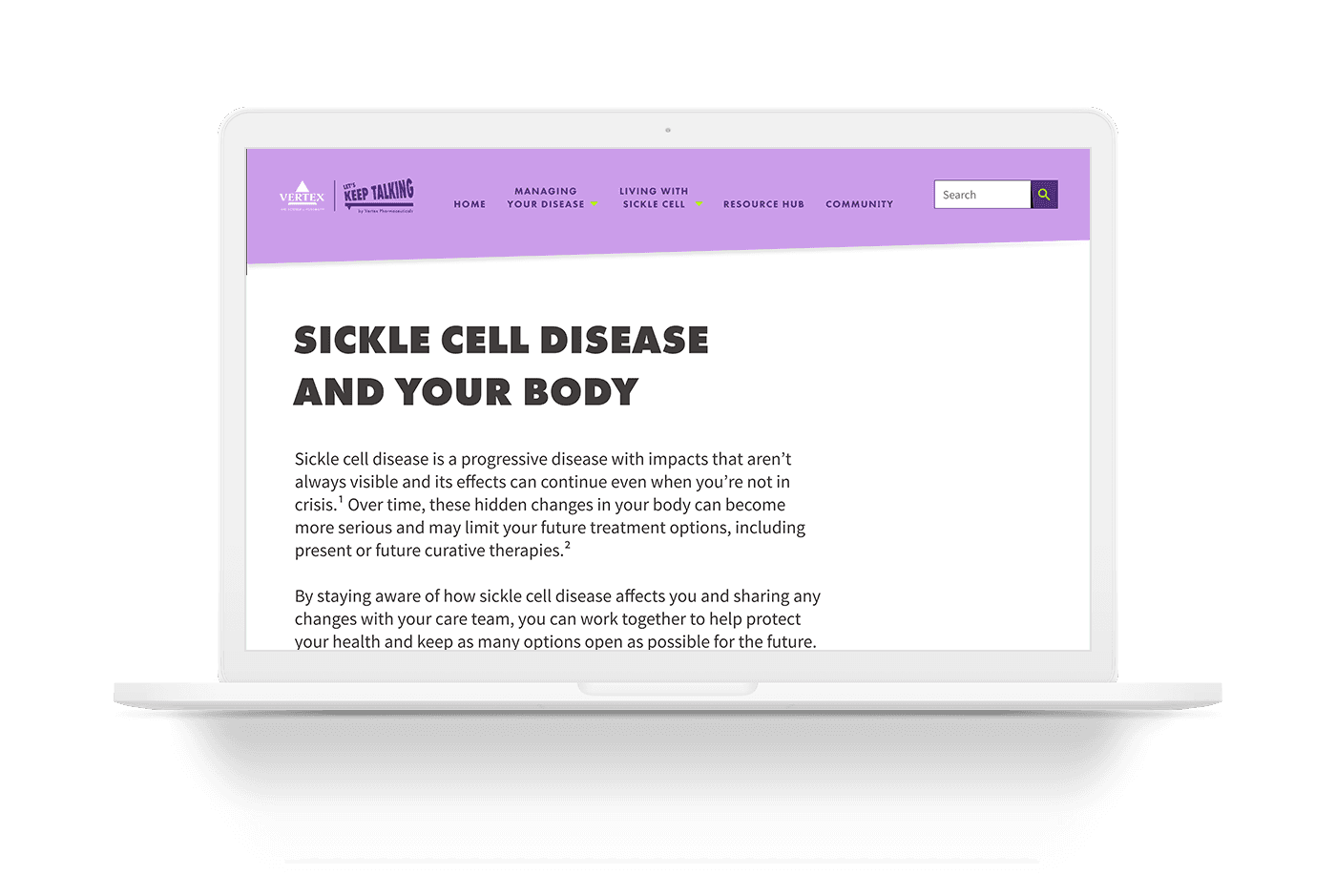
Create a page for Vertex Haemotology Let's Keep Talking campaign website, make it aligned to the pre-existing core website.
Let's Keep talking was created to support people living with sickle cell disease in navigating healthcare, taking ownership of their condition, and raising public awareness. Because sickle cell disease can be unpredictable, the campaign encourages open conversations about managing the condition in ways that suit each individual. By sharing lived experiences and promoting holistic care, it aims to empower young adults and adults to plan their futures and live well with sickle cell disease.

Scroll depth reveals where users drop off. A steep fall-off after the body diagram indicates content fatigue or lack of visual reward below the fold.
A 28-percentage-point drop between the diagram and the post-diagram text is a significant "engagement cliff." The interactive element is performing well as an attractor, but the page fails to sustain momentum past it. The journal prompt arguably the most actionable piece of content is seen by only 34% of visitors.
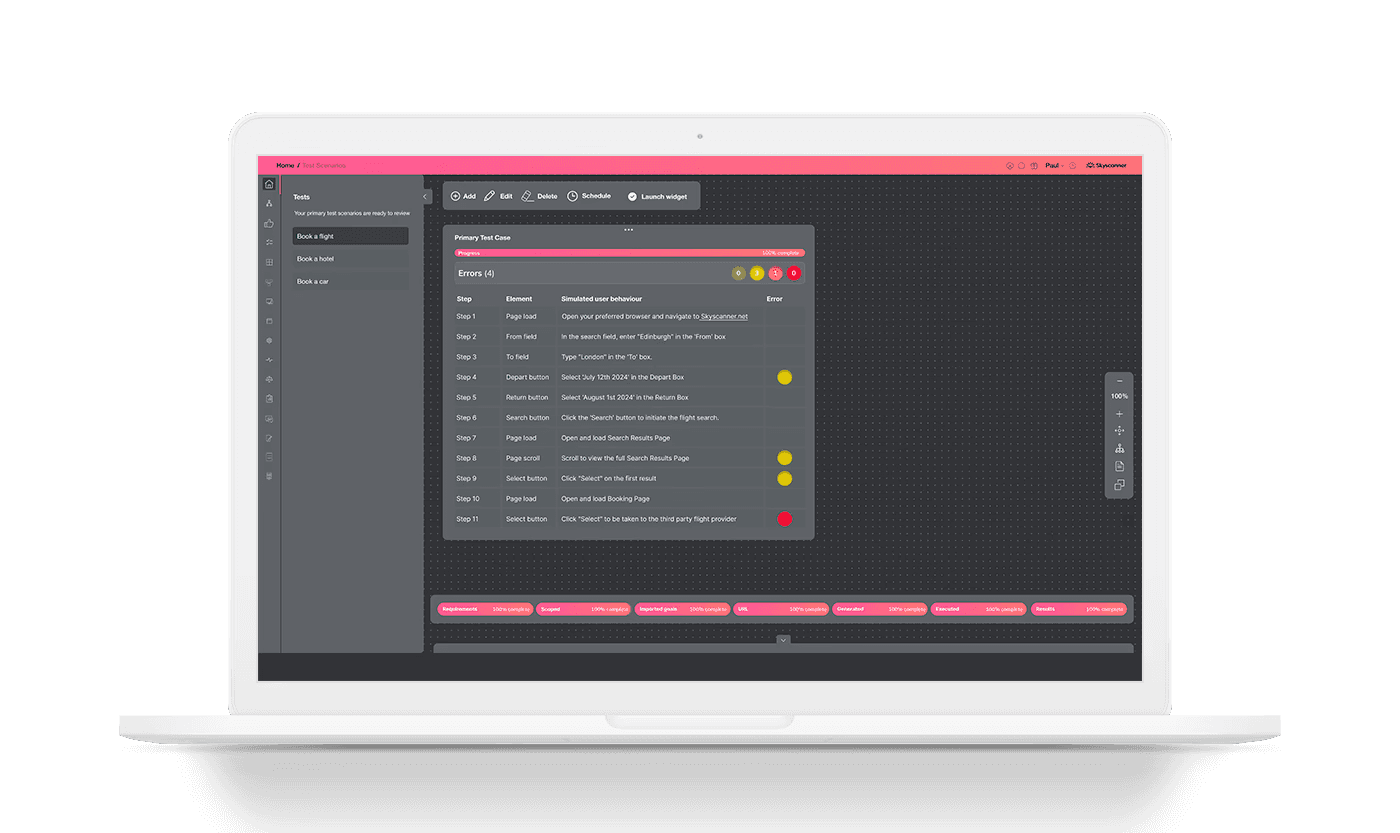
UXTweaks task-based testing revealed that the interactive body diagram is the standout engagement driver, but it lacks accessibility. The journal prompt section receives very low scroll-depth and high exit rates, suggesting copy fatigue and a missing visual anchor at a critical conversion moment.
The body diagram's click interaction is not accessible via screen reader, which may violate WCAG 2.1 AA standards, a legal compliance risk for a HCPs to access health information. However, it follows the brand's visual guidelines so the client was satisfied.